Physiotherapy
Chiropractic
Massage
Other Services
What Does Cupping Therapy Actually Do (And Why You Should Try It)
What Does Cupping Therapy Actually Do? (And Why You Should Try It)
If you’ve ever watched the Olympics or walked around a gym, you’ve likely seen people rocking circular, purple marks on their shoulders or back.
That’s cupping therapy: an ancient practice that has become a staple in modern sports medicine, physical therapy, and pain management. But what does it actually do to your body, and is it right for you?
Here is everything you need to know about cupping, how it works, and its top benefits.
How Does Cupping Work?
Most traditional muscle treatments, like deep tissue massage, foam rolling, or trigger point therapy, use compression (pushing down into the muscle).
Cupping does the exact opposite. It uses decompression (pulling tissue upward).
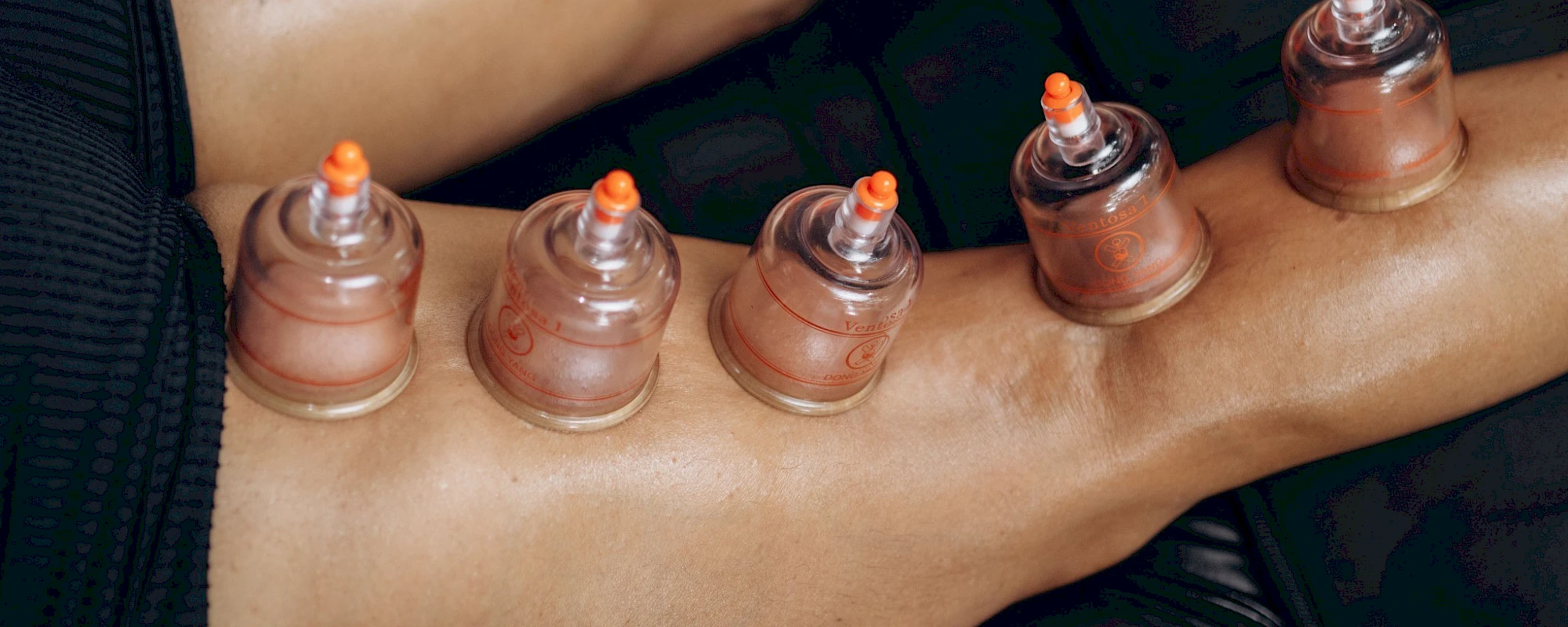
By placing specialized cups on the skin and creating a mild vacuum, cupping gently lifts the skin, fat, and fascia (the connective tissue surrounding your muscles) away from the underlying muscle. This suction triggers three main physiological reactions:
- Fascial Release: It lifts and separates tight tissue layers, breaking up stiffness and helping muscles slide smoothly.
- Boosted Circulation: The vacuum draws fresh, oxygen-rich blood flow to the targeted area, bringing in nutrients to support tissue recovery and clear out metabolic waste.
- Pain Relief: The gentle pull on your skin’s sensory nerve endings interrupts the pain signals sent to your brain, helping tight muscles relax.
4 Big Benefits of Cupping Therapy
Whether you’re recovering from intense workouts or dealing with desk-bound neck strain, cupping offers several targeted benefits:
- Relieves Muscle Tightness: Helps melt away stubborn knots in high-tension areas like the upper back, shoulders, lower back, and IT bands.
- Reduces Chronic Pain: Studies show cupping can provide effective, short-term relief for back pain, neck pain, and tension headaches.
- Improves Range of Motion: By easing tightness in the fascia, cupping helps restore mobility and flexibility to stiff joints.
- Accelerates Muscle Recovery: Increased localized blood flow helps speed up muscle repair after hard exercise.
What’s the Deal with the Round Marks?
The most famous part of cupping is the circular marks left behind.
It’s important to know that these are not traditional bruises. Bruises come from blunt force trauma. Cupping marks are superficial petechiae; harmless discolorations caused by tiny capillaries expanding under suction.
They are usually completely painless and fade on their own within 3 to 10 days.
What to Expect During a Session
Cupping can be done in a few different ways depending on your goals:
- Static Cupping: Cups stay parked in one spot for 5–10 minutes to focus on severe tension spots.
- Dynamic (Sliding) Cupping: A light lotion or oil is applied, and the cups are glided across larger muscle groups like a deep tissue massage.
- Active Movement: Cups are applied while you actively move your joint through its range of motion to restore mobility.
The Bottom Line
Cupping is a safe, non-invasive, and effective tool, especially when combined with active stretching and strength training. If you’re tired of persistent muscle stiffness or back pain, adding cupping to your recovery routine might be just what your body needs to reset.
Interested in giving cupping a try? Talk to a licensed therapist to see how it can be tailored to your body's needs!