
Physiotherapy

Chiropractic

Massage

Other Services

Hip Pain Isn’t Always a Hip Problem
Hip pain does not always come from the hip itself. The lower back, pelvis, knee, ankle, and foot all work together to control how you move and load your body. As chiropractors, we look at the hip in the context of the entire movement system rather than focusing only on where it hurts.
Where you feel pain is only one clue
Pain in the groin, outside of the hip, buttock, thigh, or knee can have different causes. Location alone does not tell us what is causing your symptoms. We consider how your pain started, previous injuries, changes in activity, mobility, strength, movement patterns, and which activities reproduce your symptoms.
Why other areas matter
The hip does not work in isolation. Limited movement or pain in the back, pelvis, knee, ankle, or foot can influence how you move and distribute load. This does not necessarily mean another area caused your hip pain. It may simply be contributing to how you are moving and what your hip is being asked to tolerate.
A chiropractic assessment may therefore examine the hip, lower back, pelvis, knee, ankle, foot, gait, strength, mobility, and the activities that aggravate your symptoms.
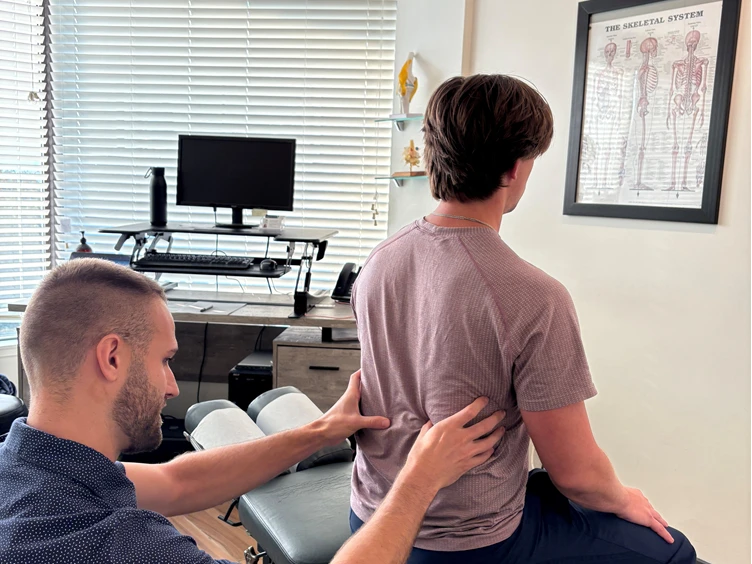
How chiropractic care can help
Depending on the findings, care may include:
• Joint and soft tissue techniques to improve mobility
• Strength and mobility exercises
• Movement and balance training
• Progressive loading and activity modification
• Guidance for returning to work, exercise, sport, or recreational activities
The goal is to improve movement, build tolerance, and help you return to the activities that matter to you.
When to get assessed
Consider an assessment if hip pain keeps returning, limits your activity, affects sleep or walking, or changes how you move.
A chiropractic assessment looks beyond the painful area to understand how the different parts of your body are working together and what may be contributing to your symptoms.
This article is for general education and does not replace an individualized clinical assessment.